



2024 – 2025 Migrant survey results
Results from the survey of New Zealand visa applicants who have an Immigration Adviser in 2024-25.
The survey was commissioned by the Immigration Advisers Authority and carried out by GravitasOPG.
Aim of the survey
Since 2009, the Immigration Advisers Authority (IAA) has surveyed clients who have used a licensed immigration adviser. The aim is to monitor the performance of advisers and provide information to help the IAA to regulate and support licensed advisers.
How the survey works
The survey uses online research methods. A selected sample of applicants are invited to participate.
Applicants must have:
- received a decision on their application
- been recorded by Immigration New Zealand as using a licensed adviser
- a personal email address on record.
The questionnaire is offered in English and Simplified Chinese. Participation in the survey is voluntary and does not affect their visa application.
The survey is run by an independent research company, and all responses are confidential. The IAA does not know who has completed the survey.
Key findings
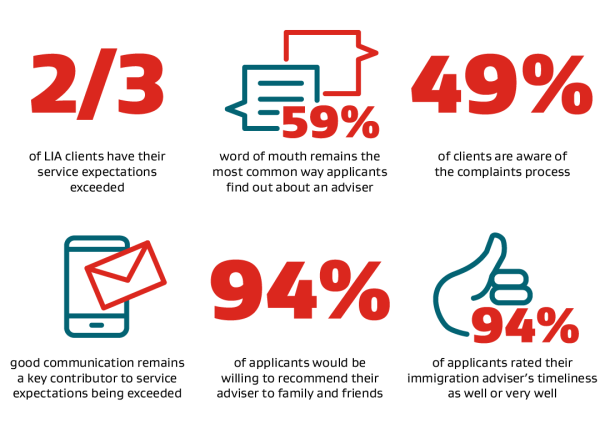
- High satisfaction continues: 90% of applicants were satisfied with the quality of service received, with 64% very satisfied. Two-thirds (67%) said their expectations were exceeded.
- Communication matters: good communication, regular updates and quick responses remains the top reason clients say their experience was better than expected. Poor communication is the most common reason people are unhappy.
- Awareness improving: 95% of applicants knew they used a licensed adviser, and awareness of the IAA has risen to 33%, close to pre-COVID levels.
- Cost perceptions positive: 95% said costs were clearly explained upfront, and overall views of value for money have improved.
- Visa conditions: Awareness of work and visitor visa conditions is strong, but uncertainty remains for student visa holders. Only 49% correctly understood requirements for changing education providers.
- Complaints process: Just under half (49%) knew how to make a complaint if unhappy with their adviser.
How you can improve
- Communicate clearly and often: Provide regular updates, confirm key discussions and steps in writing, and respond promptly to queries.
- Show your licence: Share a digital copy and explain what being licensed means for clients.
- Explain visa conditions: Pay particular attention to student visa requirements and travel conditions.
- Promote awareness: Give clients the Professional Standards in a language they understand and explain your internal complaints process.
- Set realistic expectations: Be transparent about timelines and what advisers can and cannot influence.
- Offer cultural and language support: Provide interpreters or translations where needed and respond to requests for information on the Treaty of Waitangi and Māori customs.